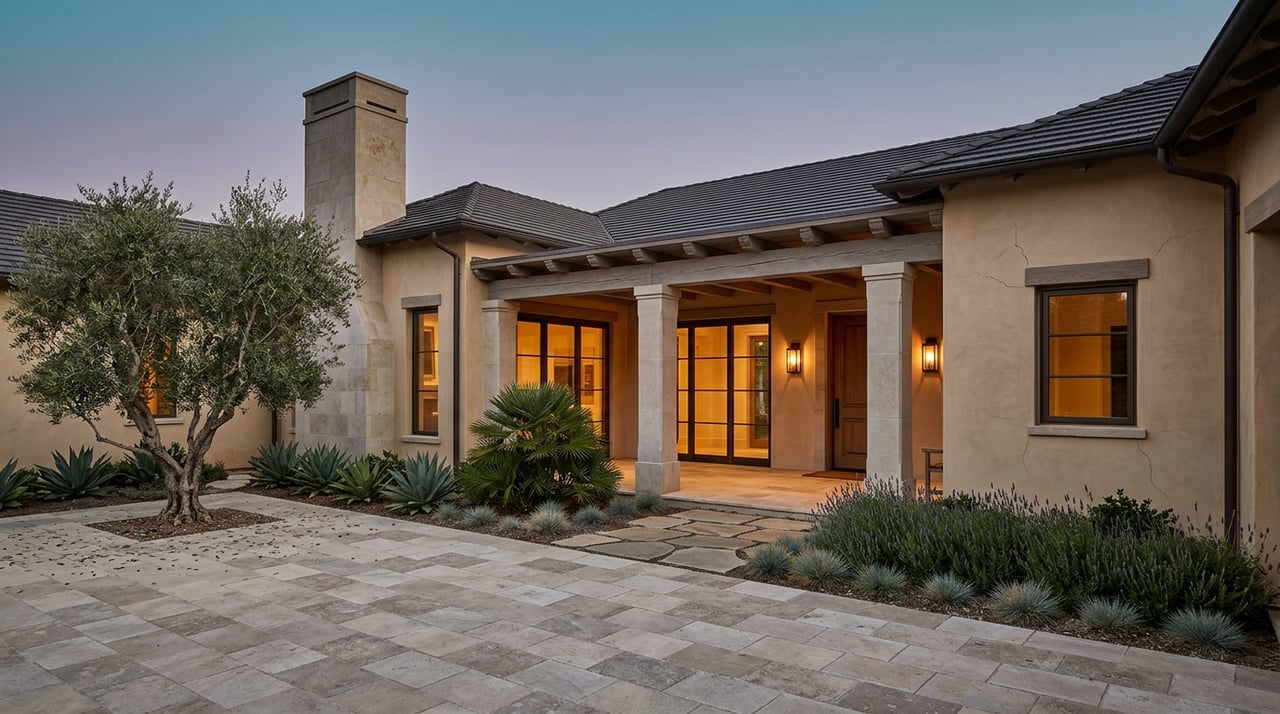
Picture two homes closing escrow the same week, both at $6 million. One sits in Woodland Hills, inside the City of Los Angeles. The other sits a few miles away in Calabasas, across the city line, inside its own incorporated city. Same price. Same commission structure. Same title company, probably.
The Woodland Hills seller writes a check for $240,000 that the Calabasas seller never has to think about.
That gap is Measure ULA, the City of Los Angeles transfer tax that voters approved in November 2022 to fund affordable housing and tenant protection programs. For transactions closing after June 30, 2026, it applies a 4% tax on the full sale price of any property that trades between $5.4 million and $10.9 million, and 5.5% on anything at or above $10.9 million. It is calculated on the entire sale price, not the amount above the threshold, and there is no exemption for age, primary residence, or how long you have owned the home. A property that sells for $6 million owes $240,000. One that sells for $12 million owes $660,000.
None of that applies in Calabasas. Because Calabasas incorporated as its own city rather than becoming a Los Angeles neighborhood, Measure ULA stops at the city limit, the same way it stops at the borders of Beverly Hills, Santa Monica, West Hollywood, and Hidden Hills. A Calabasas seller at $6 million still pays the standard Los Angeles County documentary transfer tax, a much smaller line item, but skips the ULA layer entirely. For anyone comparing a Calabasas listing against a similarly priced home a few miles over in Tarzana, Encino, or Woodland Hills, that difference belongs in the math before either property gets an offer.
The Median Price Was Never Going to Answer Your Question
Once you understand that Calabasas plays by different tax rules than the City of Los Angeles, the citywide median stops looking like useful information. As of August 2026, that number sits around $1.8 million, according to Redfin's tracking of the local market. It is true, and it tells you almost nothing, because a $1.8 million figure has to average a $900,000 attached townhome and a $9 million custom estate into a single line.
Downtown Calabasas alone recently posted a median sale price of $1.46 million over a three-month window, with homes moving in about 27 days, a pace Redfin classifies as very competitive. That is a different market from the guard-gated hillside communities a mile up the road, which barely intersect with Downtown Calabasas on buyer pool, financing, or timeline. Treating "Calabasas" as one price tier is like averaging the price of a studio apartment and a penthouse in the same building and reporting the mean as the building's value.
Here is roughly how the actual tiers break down:
| Segment | Typical Range | What Sets It Apart |
|---|---|---|
| Attached condos and townhomes (Calabasas Park Estates and similar) | Under $1M to about $1.3M | Entry point to city ownership; monthly HOA dues cover shared amenities and access |
| Non-gated single-family tracts (Calabasas Park, Las Virgenes area, Malibu Canyon) | Roughly $1.2M to $2.6M | No HOA gate fee; canyon-view or trail-adjacent lots command a premium over interior lots |
| The Oaks of Calabasas, main community | Roughly $4M to $8M | Guard-gated, built mostly late 1990s through mid-2000s, five- and six-bedroom layouts on generous lots |
| The Estates at the Oaks, second gate | Roughly $9M to $17M+ | Custom architect-built homes on lots approaching or exceeding an acre, a private gate inside the private gate |
Each of these is functionally a separate market with its own pool of buyers, its own financing conversations, and its own pace. A buyer shopping the $1.3 million tier and a buyer shopping the $12 million tier are not competing for the same inventory, and a single median obscures that completely.
The Gate Behind the Gate
The Oaks is the community most people picture when they think of guard-gated Calabasas, and it actually contains two markets stacked on top of each other. The main community holds around 500 homes built primarily by Vintage Calabasas, New Millennium Homes, and John Laing Luxury Homes, ranging from roughly 3,500 to over 8,000 square feet. Those trade in the $4 million to $8 million range.
Behind a second private gate sits The Estates at the Oaks, an enclave of roughly 50 custom homes starting around 8,000 square feet and running past 15,000, many designed by architects such as William Hablinski. Pricing there runs from about $9 million to over $17 million for active listings. The distance between the two gates is a few hundred yards. The distance between the two price bands is triple the entry point of the outer community.
That second-gate premium is not just about privacy, though privacy is part of it. It reflects lot size, custom architecture versus production building, and a pool of buyers who are shopping a different comp set entirely. If you are pricing a home in The Oaks, knowing which side of the second gate a comparable sale sat on matters more than knowing the community's overall median.
The Carrying Costs the Listing Photo Doesn't Show
Calabasas is not a single HOA environment either. The City of Calabasas maintains its own list of homeowner associations, including The Oaks of Calabasas, Calabasas Park Estates, Westridge, and Calabasas Hills Community Association, and each one sets its own governing documents, fee structure, and approval process for exterior changes.
On top of HOA dues, the city itself levies separate per-parcel district charges. Current fiscal year 2025-26 city statements show these landing at $1,018.78 for The Oaks of Calabasas, $1,460.57 for Calabasas Park Estates, and $2,191.01 for Westridge. These are not the HOA's own dues. They are a distinct city assessment layered on top, funding things like brush clearance and common-area irrigation, and they vary by more than double depending on which community you buy into.
That variation matters for a straightforward reason: two homes at the same purchase price in two different Calabasas communities can carry meaningfully different annual costs before a single HOA dues statement even arrives. A buyer comparing a $1.8 million listing in Calabasas Hills against a similarly priced home in Westridge is not just comparing square footage and lot size. They are comparing two different fee structures that will show up on every closing statement and every year after that.
What This Means If You're Comparing Calabasas to Somewhere Else in Los Angeles
Put the tax exemption and the tiered pricing together and the picture that emerges is not "Calabasas is expensive" or "Calabasas is a luxury market." It is that Calabasas is several markets wearing one zip code, and one of the differences between it and its closest neighbors in the City of Los Angeles has nothing to do with square footage, schools, or views. It is a jurisdictional line that changes what a seller keeps above $5.4 million.
For a seller weighing whether to list in Calabasas or an equivalent City of Los Angeles neighborhood like Tarzana or Woodland Hills, that line is worth running the numbers on before setting a price, not after an offer arrives. For a buyer, it is a reminder that the number on the listing page and the number that determines your actual budget are not always the same conversation, especially once HOA dues, city district assessments, and gate tier enter the picture.
A Few Direct Questions
Does every home in Calabasas skip Measure ULA? Yes, because Measure ULA applies only within the incorporated City of Los Angeles. Since Calabasas is its own city, no property sale here is subject to it, regardless of price. Beverly Hills, Santa Monica, West Hollywood, and Hidden Hills are exempt for the same reason.
Is the second gate at The Oaks always going to cost more than the main community? Based on recent pricing, yes, by a wide margin. The main community runs roughly $4 million to $8 million, while The Estates at the Oaks behind the second gate runs from about $9 million into the high teens of millions, reflecting larger lots, custom architecture, and a much smaller pool of available homes.
Are HOA dues the same across Calabasas gated communities? No. Both HOA dues and the city's separate per-parcel district charges vary by community, sometimes by more than double, so it is worth reviewing the current fee schedule and reserve study for the specific community you are considering rather than assuming one Calabasas HOA looks like another.
If you are weighing a purchase or sale in Calabasas and want to understand how a specific community, price tier, or timeline affects your net numbers, Jonnelle Lewin and the Witek Lewin Group can walk through the math with you before you commit to a list price or an offer.